In Dubai’s competitive retail landscape, implementing a SIRA approved surveillance system isn’t just about security—it’s a legal requirement that protects your business and customers. Retail chains face unique challenges in meeting SIRA (Security Industry Regulatory Agency) standards while maintaining operational efficiency and customer privacy. This comprehensive guide walks you through essential compliance tips, from camera specifications to installation processes, ensuring your retail establishment meets all regulatory requirements while maximizing security effectiveness. Whether you’re upgrading an existing system or installing a new one, understanding SIRA compliance is crucial for avoiding penalties and maintaining your business license.
Key Takeaways
- SIRA approved CCTV systems are mandatory for retail establishments in Dubai, with specific technical requirements for cameras, recording equipment, and storage capabilities.
- Strategic camera placement must balance comprehensive coverage of high-risk areas with privacy regulations, particularly in fitting rooms and staff areas.
- Partnering with a certified security camera installation service ensures proper system design, installation, and documentation for SIRA approval.
- Regular maintenance, staff training, and compliance audits are essential for maintaining your SIRA certification and ensuring long-term system effectiveness.
Understanding SIRA Compliance for Retail Security
SIRA compliance forms the foundation of legal surveillance operations in Dubai’s retail sector. The regulatory framework ensures that all security systems meet minimum standards for image quality, data protection, and operational reliability. For retail chains operating multiple locations, understanding these requirements is critical for consistent implementation across all branches. SIRA approved systems provide legal protection for businesses in case of disputes while demonstrating commitment to customer and employee safety.
What Makes a CCTV System SIRA Approved?
A SIRA Approved CCTV system must meet specific technical and operational criteria established by Dubai’s regulatory authorities. The system requires high-definition cameras capable of capturing clear facial features from designated distances, typically minimum 2MP resolution for identification purposes. All equipment must be sourced from SIRA-approved manufacturers and installed by certified technicians. The system architecture must include redundant storage solutions, continuous recording capabilities, and secure data transmission protocols. Additionally, the installation must undergo inspection by SIRA-authorized engineers who verify compliance with all technical specifications before issuing certification. This rigorous approval process ensures that your retail security infrastructure meets international standards for reliability and effectiveness.
Legal Requirements for Retail Establishments in Dubai
Dubai law mandates that all retail establishments above certain size thresholds must install SIRA approved CCTV systems. Retail chains must maintain recorded footage for a minimum of 30 days, with some categories requiring up to 180 days of retention. Businesses must designate a security coordinator responsible for system management and compliance reporting. Non-compliance can result in fines ranging from AED 10,000 to AED 100,000, temporary closure orders, or business license suspension. According to SIRA regulations updated in 2024, retailers must also implement access control systems integrated with CCTV for comprehensive security management. Store managers must complete certified training programs covering privacy laws, data handling, and emergency response protocols.
Essential Components of SIRA Approved CCTV Systems
A compliant surveillance infrastructure for retail operations requires multiple integrated components working seamlessly together. The system must deliver consistent performance under varying lighting conditions, peak shopping hours, and potential emergency situations. Understanding these components helps retail managers make informed decisions when upgrading or installing new security systems.
Camera Specifications and Standards
SIRA approved cameras for retail environments must feature minimum 1080p resolution, though many retailers opt for 4MP or higher for enhanced identification capabilities. Cameras should include wide dynamic range (WDR) technology to handle challenging lighting conditions near entrances and windows. Infrared night vision capability is mandatory for 24-hour monitoring, even in well-lit stores. Camera housings must be vandal-resistant (IK10 rated) and weatherproof (IP66 or higher) for outdoor installations. Pan-tilt-zoom (PTZ) cameras should be deployed at strategic locations like cashier areas and high-value merchandise sections, controlled through the central monitoring system.
Recording and Storage Requirements
Central to SIRA compliance is robust recording infrastructure that ensures continuous operation and data integrity. The Network Video Recorder (NVR) must support simultaneous recording from all cameras at full resolution without frame drops. Storage capacity should accommodate minimum 30-day retention at highest quality settings, calculated as approximately 2-3TB per 10 cameras. RAID configuration is mandatory for data redundancy, typically RAID 5 or RAID 6 for enterprise installations. The system must include uninterruptible power supply (UPS) capable of maintaining operations for at least 4 hours during power outages. Backup storage, either on-site or cloud-based, provides additional protection against system failures or tampering.
Data Retention Policies
Retailers must implement clear data retention protocols aligned with SIRA mandates and UAE data protection laws. Footage must be stored in encrypted format with access restricted to authorized personnel only. Regular backup schedules should be automated, with verification procedures to ensure backup integrity. SIRA certified companies recommend implementing a three-tier storage strategy: active storage (0-30 days), archive storage (31-90 days), and long-term retention (90+ days) for incident-related footage. Deletion procedures must be documented and logged, with secure data wiping protocols to prevent recovery of deleted footage.
Strategic Camera Placement for Retail Chains
Effective surveillance coverage requires strategic planning that considers customer flow, merchandise layout, and regulatory requirements. Retail chains must balance comprehensive monitoring with customer comfort and privacy expectations. Professional security audits help identify vulnerable areas and optimize camera placement for maximum effectiveness.
High-Priority Areas for Surveillance
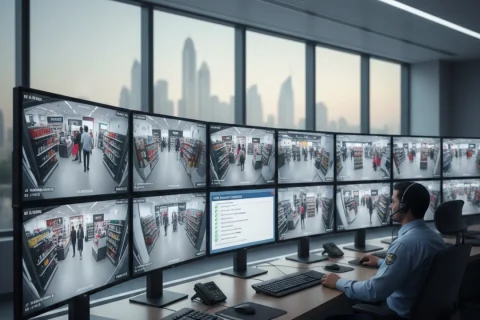
Entry and exit points require continuous monitoring with high-resolution cameras positioned to capture facial features of all entering customers. Point-of-sale (POS) stations need dedicated cameras angled to record transaction details and cash handling procedures. High-value merchandise areas including jewelry, electronics, and designer goods demand 24/7 monitoring with multiple camera angles. Stockrooms and receiving areas must be covered to prevent internal theft and verify inventory movements. Parking areas and external perimeters need weatherproof cameras with enhanced night vision capabilities. According to a National Retail Federation study, strategically placed cameras reduce retail shrinkage by up to 50% while providing valuable data for loss prevention analysis.
Privacy Considerations and Compliance
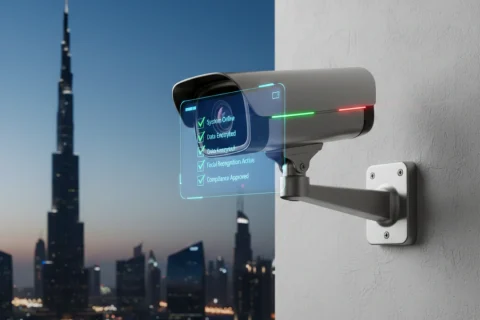
SIRA regulations strictly prohibit camera installation in private areas including fitting rooms, restrooms, and employee break rooms. Cameras monitoring staff-only areas must be clearly signposted with visible warnings about surveillance. Customer notification signs must be displayed at all store entrances in both English and Arabic, stating that video surveillance is in operation. Facial recognition technology, while permitted, requires additional approvals and must comply with UAE’s data privacy laws. Audio recording is prohibited in customer-facing areas unless specific authorization is obtained. Retailers should develop comprehensive privacy policies addressing data access, sharing, and customer inquiry procedures. Regular privacy impact assessments help identify potential compliance issues before they become regulatory violations.
Customer Flow Analysis Integration
Modern SIRA approved systems can integrate surveillance footage with customer analytics tools while maintaining compliance. Heat mapping technology identifies high-traffic areas and optimal product placement zones without storing personally identifiable information. Dwell time analysis helps retailers understand customer behavior patterns and optimize store layouts. Queue management systems use camera feeds to monitor checkout lines and deploy additional staff during peak periods. These analytics must operate within SIRA guidelines, ensuring that data collection serves legitimate business purposes without compromising customer privacy.
Installation and Certification Process
Navigating the SIRA approval process requires careful planning and professional expertise. Retail chains should begin the compliance journey at least 3-4 months before intended opening dates or system upgrades. Working with experienced contractors streamlines the process and reduces the risk of costly rejections or modifications.
Choosing a SIRA Certified Installation Service
Selecting a qualified security camera installation service is crucial for successful SIRA certification. Verify that contractors hold current SIRA installation licenses and employ certified technicians. Request portfolio examples from similar retail projects, including documentation of previous SIRA approvals. The contractor should provide comprehensive system design proposals including camera placement diagrams, equipment specifications, and compliance documentation. Professional installers conduct site surveys identifying optimal mounting locations, cable routing, and network infrastructure requirements. They manage the entire approval process including document submission, SIRA inspections, and any required modifications. Post-installation support should include staff training, system documentation, and maintenance contracts. Companies like VITS specialize in smart ELV systems integration, ensuring your CCTV works seamlessly with access control and alarm systems.
Documentation and Approval Timeline
SIRA certification requires extensive documentation including system design drawings, equipment datasheets, installation certificates, and operational procedures manuals. Contractors must submit detailed as-built drawings showing exact camera locations, fields of view, and coverage maps. Network diagrams illustrate system architecture, storage configuration, and redundancy measures. The approval timeline typically spans 4-6 weeks from initial submission to final certification. SIRA inspectors conduct on-site visits verifying installation quality, system functionality, and documentation accuracy. Common rejection reasons include inadequate coverage of mandatory areas, substandard equipment, or incomplete documentation. Retail chains should allocate contingency time for potential resubmissions or system modifications. Once approved, SIRA issues certification valid for one year, requiring annual renewal inspections to maintain compliance status.
Maintaining Compliance and System Performance
SIRA certification isn’t a one-time achievement but an ongoing commitment requiring regular attention and resources. Retail chains must establish maintenance protocols ensuring consistent system performance and regulatory compliance. Proactive management prevents costly downtime and maintains the legal protection that SIRA certification provides.
Regular Audits and Updates
Annual SIRA inspections verify continued compliance with all technical and operational requirements. Internal monthly audits should check camera functionality, recording quality, and storage capacity availability. Software updates must be applied promptly to address security vulnerabilities and maintain manufacturer support. Hardware components typically require replacement every 5-7 years as technology advances and equipment ages. Retailers should maintain detailed maintenance logs documenting all service activities, repairs, and system modifications. As noted by Gartner research, organizations with structured maintenance programs experience 40% fewer system failures and 30% lower total cost of ownership. Consider establishing maintenance contracts with certified service providers ensuring priority response times and expert technical support.
Staff Training Requirements
All personnel with system access require comprehensive training covering operation procedures, privacy regulations, and emergency protocols. Security coordinators must complete SIRA-certified courses covering regulatory requirements and compliance management. Store managers need training on basic troubleshooting, footage retrieval procedures, and incident reporting protocols. Regular refresher sessions keep staff updated on policy changes and new system features. Training documentation must be maintained demonstrating compliance with SIRA’s human resource requirements. Mock emergency drills test staff response procedures and identify training gaps. Well-trained staff maximize system effectiveness while minimizing the risk of compliance violations due to improper operation or data handling.
Conclusion
Implementing a SIRA approved CCTV system for your retail chain requires careful planning, professional installation, and ongoing commitment to compliance. From understanding technical specifications and strategic camera placement to maintaining certification through regular audits, each step contributes to a secure and legally compliant retail environment. By partnering with experienced providers and investing in quality equipment, retail chains protect their assets, ensure customer safety, and demonstrate regulatory compliance. The investment in sira CCTV systems delivers long-term value through loss prevention, operational insights, and legal protection. Take the next step toward comprehensive retail security by consulting with SIRA-certified professionals who understand the unique challenges of multi-location retail operations.
FAQ
1. What does SIRA approved mean for CCTV systems?
SIRA approved means the CCTV system meets Dubai’s Security Industry Regulatory Agency standards for equipment quality, installation practices, and operational compliance. It ensures cameras, recording devices, and storage solutions meet minimum technical specifications required by law.
2. How much does a SIRA approved CCTV installation cost for retail stores?
SIRA approved CCTV installation costs range from AED 15,000 to AED 100,000+ depending on store size, camera count, and system complexity. Professional CCTV installation in Dubai providers offer customized quotes based on your retail security requirements.
3. What are the penalties for non-compliance with SIRA CCTV regulations?
Non-compliance penalties range from AED 10,000 to AED 100,000 fines, plus potential business license suspension or temporary closure orders. Repeated violations can result in permanent license revocation and legal proceedings against business owners in Dubai.
4. Can I install CCTV cameras myself or do I need a security camera installation service?
You must use a licensed security camera installation service for sira CCTV systems. Only SIRA-certified contractors can legally install, configure, and certify surveillance systems to meet Dubai’s regulatory requirements and obtain official approval certificates.
5. How long does footage need to be stored for SIRA compliance?
SIRA regulations require retail establishments to retain recorded footage for minimum 30 days, with certain high-risk categories requiring up to 180 days. Storage systems must use encrypted formats with redundant backup capabilities to prevent data loss.
6. What camera resolution is required for SIRA approved systems?
SIRA approved systems require minimum 1080p (2MP) resolution cameras capable of clear facial identification. Many retailers choose 4MP or higher resolutions for enhanced detail, particularly in high-value merchandise areas and point-of-sale locations.
7. How often do SIRA CCTV systems need maintenance and inspection?
Annual SIRA inspections are mandatory for certification renewal, while monthly internal checks ensure optimal performance. Integrating security systems with ELV infrastructure provides streamlined maintenance through centralized monitoring and automated alerts for system issues.
8. Are there privacy restrictions on camera placement in retail stores?
Yes, cameras cannot be installed in fitting rooms, restrooms, or employee break rooms. Customer notification signs must be displayed at entrances, and surveillance in staff areas requires clear signage ensuring compliance with UAE privacy laws.
9. Can existing CCTV systems be upgraded to meet SIRA standards?
Existing systems can sometimes be upgraded if infrastructure and cabling meet standards, though cameras, NVRs, and storage typically require replacement. Modern ELV systems enable seamless integration of upgraded SIRA-compliant components with existing security infrastructure.